London’s transport network is evolving, and one of the most exciting changes is the distinctive identity given to the London Overground routes. Among these is the Mildmay line—represented by blue parallel lines on the map—which serves as a vital artery connecting East, North, and West London.
Tracing a path from Stratford in the east down to Clapham Junction in the south-west, this line is often affectionately dubbed the “tourist’s orbital” or the “hipster express”. It avoids the subterranean darkness of the Tube, offering passengers bright, air-conditioned carriages and a window seat to some of London’s most vibrant neighbourhoods.
What makes this route special
The Mildmay line is more than just a commuter railway; it is a cross-section of London culture. The line is named to honour the Mildmay Mission Hospital in Shoreditch, reflecting a rich history of charitable care during the HIV/AIDS crisis in the 1980s.
For the traveller, the route offers a unique proposition: it allows you to travel between major hubs without ever touching the congestion of Zone 1. It creates a seamless link between the Olympic legacy of the east, the creative hubs of Hackney and Dalston, the punk-rock heritage of Camden, and the affluent, riverside charm of West London. It is one of the few train lines where you can watch the city’s architecture shift dramatically from industrial chic to Victorian grandeur within 40 minutes.
A route breakdown of key locations
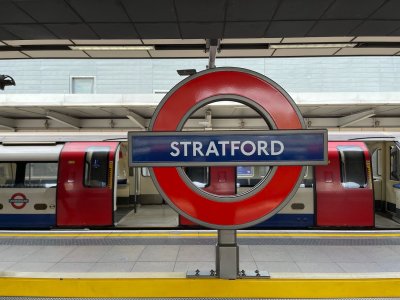
The journey begins at Stratford, a powerhouse of activity home to the Queen Elizabeth Olympic Park and the colossal Westfield shopping centre. As the train pulls away, you quickly enter the creative heartland of the city.
The creative East
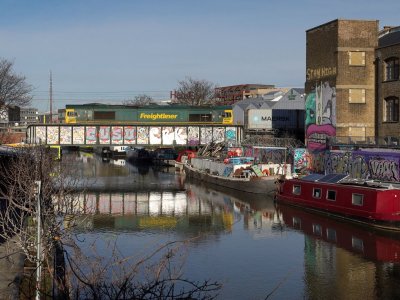
The first major stop of interest is Hackney Wick. Famous for its warehouse conversions, craft breweries, and canal-side street art, this is a must-visit for anyone looking for London’s bohemian edge. Moving along, you pass through Homerton and Hackney Central, offering easy access to the Hackney Empire and the bustling Mare Street.
A few minutes later, you arrive at Dalston Kingsland. This area is renowned for its nightlife, jazz clubs, and the bustling Ridley Road Market. The line then curves through the leafy enclave of Canonbury before reaching the stylish Highbury & Islington, the gateway to Upper Street’s famous dining scene.
North London highlights
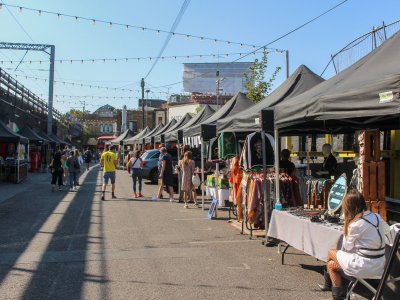
As the train heads west, it stops at Caledonian Road & Barnsbury before hitting Camden Road. This station is just a short walk from the world-famous Camden Markets and the Regent’s Canal. It’s a perfect hop-off point for food stalls and vintage fashion.
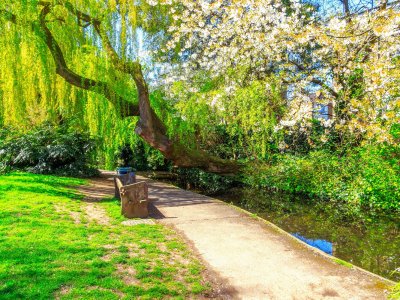
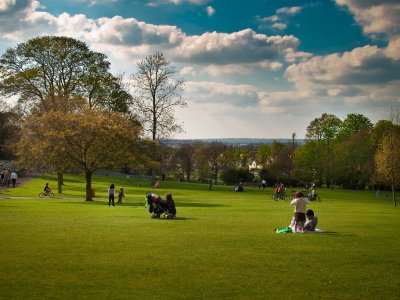
Leaving the urban density behind, the line reaches Gospel Oak and the magnificent Hampstead Heath. If you are craving fresh air, this stop places you moments away from one of London’s wildest green spaces and the swimming ponds.
West London and the river
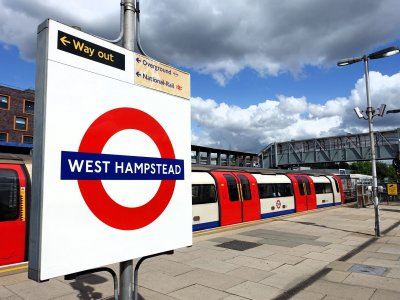
Continuing the arc, the train passes through Finchley Road & Frognal and West Hampstead, areas known for their village-like atmosphere. You will then travel through Brondesbury, Kensal Rise, and the major interchange of Willesden Junction.
The scenery becomes noticeably grander as you reach Shepherds Bush. This is the second “Westfield” stop on the line, creating a unique “shop-till-you-drop” loop from Stratford. The route continues through Kensington (serving the Olympia exhibition centre) and West Brompton.
Just before the terminus, you stop at Imperial Wharf. This is a hidden gem for river views and access to the design hub of Chelsea Harbour. Finally, the line terminates at Clapham Junction, one of the busiest railway stations in Europe, offering endless connections to the south coast and a vibrant local bar scene on Northcote Road.
When does the route run
The Mildmay line operates seven days a week, generally running from early morning (around 05:30) until around midnight. On Sundays, start times may be slightly later.
It is worth noting that this is a very popular commuter route. While it runs frequently throughout the day, the character of the journey changes depending on the hour. Mid-mornings and early afternoons are peaceful and perfect for sightseeing, while rush hours (08:00–09:30 and 17:00–18:30) can be standing-room only.
Service frequency and connections
One of the best features of this line is its “turn up and go” frequency.
- Peak times: Trains run approximately every 8–10 minutes.
- Off-peak and weekends: You can usually expect a train every 15 minutes.
The connectivity is superb. You can swap onto the London Underground at multiple points:
- Central Line: At Stratford and Shepherd’s Bush.
- Victoria Line: At Highbury & Islington.
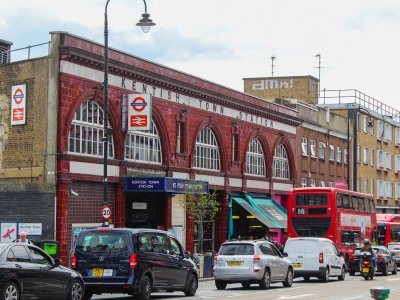
- Northern Line: At Camden Town (short walk from Camden Road) or Kentish Town (via Kentish Town West).
- Jubilee Line: At Stratford and West Hampstead.
Value for money
Travelling on the Mildmay line is generally cheaper than using the Tube to cross London, primarily because it allows you to skirt around Zone 1. If you travel from Stratford (Zone 2/3) to Clapham Junction (Zone 2) via this route, you avoid the higher fare incurred by travelling through the city centre.
The line is fully integrated into the Transport for London (TfL) system, meaning you can use your Oyster card, contactless bank card, or mobile device (Apple Pay/Google Pay). Daily capping applies, so once you have made a certain number of journeys, the rest of your travel that day is free.
Top tips for the journey
- Window shopping: The route connects London’s two massive Westfield shopping centres (Stratford and Shepherd’s Bush). It’s a popular challenge to have breakfast at one and dinner at the other, using the Mildmay line to bridge the gap.
- Avoid the crush: If you are travelling with luggage or a pushchair, try to avoid the peak commuter windows. The carriages are spacious and have dedicated multi-use areas, but these fill up fast during rush hour.
- The view: Unlike the Underground, you have phone signal and 4G/5G coverage for almost the entire journey, making it easy to plan your next stop while on the move.
- Check the destination: Be aware that some trains might terminate early at Willesden Junction or Camden Road, particularly late at night or during engineering works. Always check the display boards.
Planning a day out on this route
The Mildmay line is essentially a “day out” on rails. Here is a suggested itinerary for a Saturday:
- 09:30: Start at Hackney Wick for a coffee by the canal. Watch the narrowboats drift by as the city wakes up.
- 11:30: Hop on the train to Camden Road. Walk down to the Stables Market for some street food lunch and souvenir shopping.
- 14:30: Take the train west to Hampstead Heath. A walk up Parliament Hill offers one of the best skyline views of London—completely free.
- 17:00: Rejoin the train and head to Imperial Wharf. Enjoy a sunset drink at a riverside pub overlooking the Thames.
- 19:00: Finish at Clapham Junction for dinner on Northcote Road.
Whether you are a local looking to explore a new borough or a visitor wanting to see the “real” London beyond the guidebooks, the Mildmay line offers a reliable, scenic, and culturally rich journey across the capital.