The swift shuttle beneath the Thames
When you think of exploring London, you might picture double-decker buses weaving through traffic or leisurely river cruises. However, one of the most vital—and unique—connections in the capital is hidden deep beneath the pavement. The Waterloo & City Line, operated by Transport for London (TfL), is a fascinating oddity in the transport network. Often affectionately known by Londoners as “The Drain” due to the shape of its deep tunnels, this short shuttle service does exactly what it says on the tin: it whisks you between Waterloo (Greater London) and Bank (Greater London) in just four minutes.
While it may not offer the panoramic window views of a bus route, the Waterloo & City Line is a magic portal that connects two of London’s most incredibly scenic and distinct worlds. In less time than it takes to boil a kettle, you can travel from the artistic, riverside vibrancy of the South Bank to the historic, architectural grandeur of the City of London. For the savvy traveller, this line is the ultimate shortcut to seeing more of London in less time.
What makes this route special
The Waterloo & City Line is an exclusive club of sorts; it is the shortest line on the entire London Underground network, measuring just 2.37 kilometres (1.47 miles). Unlike other lines that sprawl across the suburbs, this turquoise-coloured line serves only two stations: Waterloo and Bank.
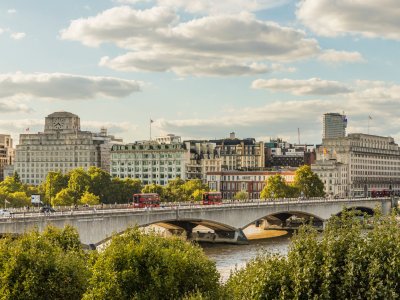
What truly makes it special, however, is its efficiency. It was built in 1898 specifically to carry commuters arriving at Waterloo mainline station into the City’s financial district. Because it runs deep under the River Thames, it bypasses the heavy traffic on Waterloo Bridge and the winding streets of central London. For a tourist, this means you can enjoy the London Eye in the morning and be exploring the Bank of England Museum by lunchtime, without the exhaustion of a long walk or a slow bus ride in traffic.
A route breakdown of key locations
Since the journey itself takes place in a tunnel, the “scenery” is found at the spectacular destinations at either end of the line. Here is what awaits you when you step off the train.
Waterloo: The riverside playground
Your journey likely begins (or ends) at Waterloo, the UK’s busiest railway station. Stepping out here places you in the heart of London’s cultural district. You are just moments away from the South Bank, a riverside promenade lined with street performers, food markets, and iconic landmarks.
- The London Eye: The giant wheel offering views over the entire city.
- Southbank Centre: A hub for music, art, and festivals.
- SEA LIFE London Aquarium: A favourite for families.
- Lower Marsh: A historic market street nearby, full of independent cafes and vintage shops.
The Journey: The 4-minute dash
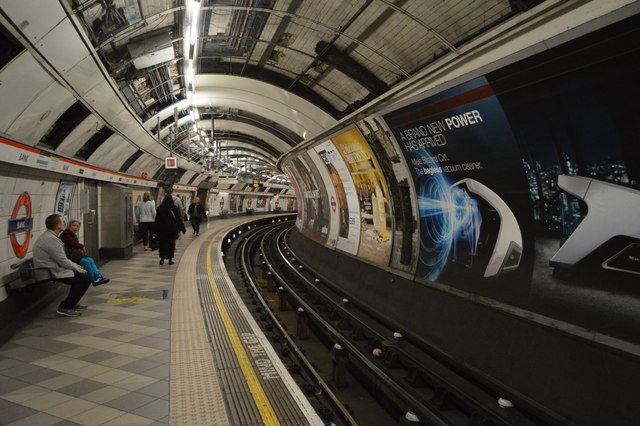
Once you tap through the barriers, you will descend deep underground. The ride is smooth and incredibly fast. While there are no sights to see out of the window, there is a sense of historical novelty in travelling on London’s second-oldest deep-level tube line. You are travelling directly underneath the River Thames, a feat of Victorian engineering that still serves millions today.
Bank: The historic powerhouse
Four minutes later, you arrive at Bank, located in the City of London (the famous “Square Mile”). The contrast is striking. You emerge from the station into a world of towering stone columns, narrow medieval alleyways, and skyscrapers.
- Bank of England: The massive fortress-like building that stores the nation’s gold.
- The Royal Exchange: Once a centre of commerce, now a luxury shopping and dining destination.
- Leadenhall Market: A stunning covered Victorian market (and a filming location for Harry Potter).
- St Paul’s Cathedral: Just a short walk away, offering one of the most famous domes in the world.
When does the route run
This is the most critical piece of information for any traveller planning to use the Waterloo & City Line: it operates on weekdays only.
Because its primary purpose is to serve the City workforce, the line runs from Monday to Friday. It is closed on Saturdays, Sundays, and public holidays. If you are planning a weekend sightseeing trip, you will need to take alternative routes (such as the number 26 or 76 bus, or the Northern Line via London Bridge). However, for a weekday adventure, it is the fastest option available.
Operating hours:
- Monday to Friday: Services typically run from around 06:00 until 00:30.
Service frequency and connections
The frequency on the Waterloo & City Line is impressive. During peak rush hours (08:00–09:30 and 17:00–18:30), trains arrive every few minutes, designed to move thousands of commuters quickly. Off-peak, you rarely have to wait more than 5 to 10 minutes for a train.
- Connections at Waterloo: Connects with the Bakerloo, Jubilee, and Northern lines, as well as National Rail services to the south and west of England.
- Connections at Bank: Connects with the Central and Northern lines, and the DLR (Docklands Light Railway) for trips to Canary Wharf and Greenwich. It is also connected via underground walkway to Monument station for the District and Circle lines.
Value for money
The Waterloo & City Line sits entirely within Zone 1. The fare is the standard Transport for London Zone 1 tube fare.
- Contactless & Oyster: The cheapest way to travel. Daily capping applies, so if you take multiple rides in Zone 1 and 2, your spending is capped at a daily limit.
- Speed vs. Cost: considering it saves you a 25-minute walk or a potentially slow taxi ride across the bridge, it offers excellent value in terms of time saved.
Top tips for the journey
- Avoid Rush Hour: Between 8am-9am and 5pm-6pm, this line is packed with commuters in suits. For a more relaxed experience, travel between 10am and 4pm. You will often find plenty of seats and a much calmer atmosphere.
- Mind the Gap: Being an old line, some of the platforms are curved, creating a gap between the train and the platform. Always watch your step.
- Use the Moving Walkway: At Bank station, there is a steep, long travelator (moving walkway) to get you up to the street level. It is one of the steepest in the system and a fun little novelty in itself.
- Know Your Exits: Bank station is a labyrinth. Look for the signs to “Poultry” or “Princes Street” for the Bank of England, or “Lombard Street” for a historic stroll.
Planning a day out on this route
Here is a perfect itinerary for a weekday “Tale of Two Londons” using the Waterloo & City Line:
- 09:30 AM: Start at Waterloo (Greater London). Grab a coffee on Lower Marsh and take a morning stroll along the South Bank to see the London Eye and the street performers.
- 11:00 AM: Head into Waterloo station and tap in for the Waterloo & City Line. Enjoy the 4-minute zoom under the river.
- 11:15 AM: Arrive at Bank (Greater London). Emerge right in front of the Royal Exchange.
- 11:30 AM: Visit the Bank of England Museum (it’s free!) or wander through the historic lanes to see the Gherkin and the Lloyd’s building.
- 01:00 PM: Have lunch at Leadenhall Market, admiring the painted roof and cobbled floors.
- 02:30 PM: Walk ten minutes west to St Paul’s Cathedral to finish your day with some of London’s finest architecture.
By using this “secret” underground link, you can effortlessly combine the modern, artistic vibe of Waterloo with the ancient, powerful atmosphere of the City, all without getting stuck in traffic.