Route: Lewes to Eastbourne (via Ringmer, Glynde, Alfriston & Polegate)
Operator: Compass Travel
Journey Time: Approx. 60–70 minutes
If you are looking for a journey that stitches together the very best of the South Downs’ artistic heritage, rolling countryside, and historic villages, look no further than the Compass 125.
While the train between Lewes and Eastbourne might be faster, it misses the heart of the county. The 125 is the traveller’s choice—a meandering service that trades speed for charm, taking you down country lanes, past ancient chalk figures, and through the literary landscapes of the Bloomsbury Group.
What makes this route special
The Compass 125 is effectively the “Culture & Countryside” express. It serves as a vital lifeline connecting the rural communities along the foot of the South Downs.
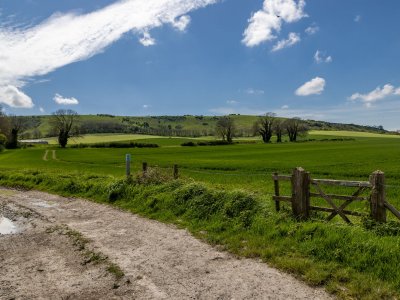
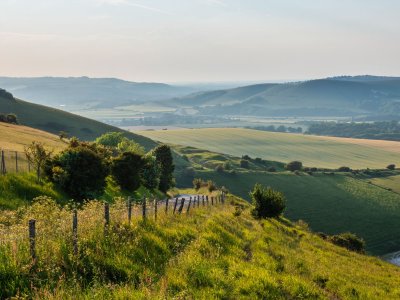
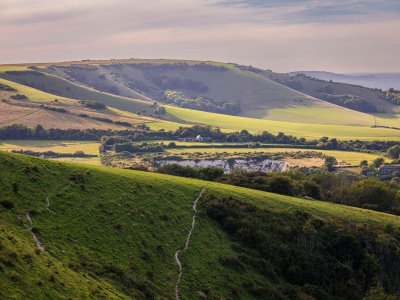
For visitors, it is the key that unlocks the “hidden” Sussex. This bus doesn’t just stick to the main road; it dips into the quintessential villages that cars often bypass. It offers exclusive views of the South Downs ridge, provides access to world-class opera at Glyndebourne, and drops you within walking distance of the artistic havens of Charleston and Firle.
A route breakdown of key locations
The historic start: Lewes and Ringmer
Your journey begins in Lewes, the county town of East Sussex. Before boarding, you might want to explore the Norman Castle or grab a coffee near the ancient High Street. As the bus leaves the town, it heads towards Ringmer, a large village with a strong community feel and history dating back to the Romans.
The cultural heart: Glynde and Glyndebourne
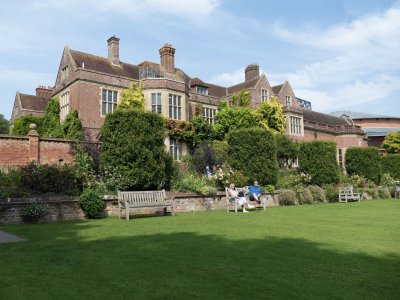
Crossing into the countryside, the bus reaches Glynde. This is a postcard-perfect village, famous for its Elizabethan manor house, Glynde Place. Just up the road is the world-renowned Glyndebourne Opera House. During the festival season, seeing elegantly dressed opera-goers mingling with hikers is a unique local sight.
The Bloomsbury trail: Firle, Charleston and Selmeston
As the bus continues along the A27 corridor, you enter “Bloomsbury” territory. You will pass Firle, a village that feels frozen in time, home to the sprawling Firle Place.
Keep your eyes peeled as you approach Selmeston. The route here offers access to Charleston, the former countryside retreat of Virginia Woolf’s sister, Vanessa Bell. Note for travellers: The bus stops on the main road (A27), and it is a scenic walk up the lane to reach the farmhouse itself.
The capital of the Downs: Alfriston
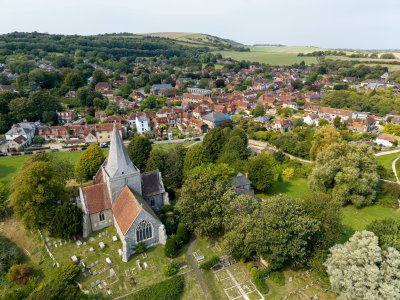
A major highlight of the 125 is its stop in Alfriston. This is widely considered one of the most beautiful villages in England. The bus drops you centrally, allowing you to see the medieval Clergy House (the first property ever bought by the National Trust) or enjoy a cream tea in one of the many smuggling-era inns.
Art and ancient giants: Berwick and Wilmington
Passing through Berwick, look out for the church which was famously painted by the Bloomsbury artists during WWII. Further along in Wilmington, glance up at the hills to spot the Long Man of Wilmington, a mysterious 235ft figure carved into the chalk of the Downs.
The suburban descent: Polegate to Eastbourne
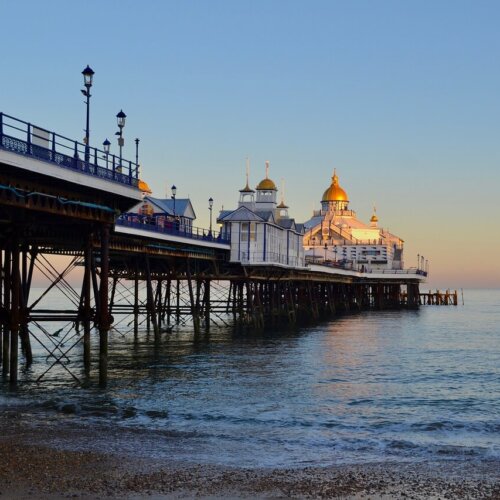
The final leg brings you back towards civilisation through Polegate and the leafy suburbs of Lower Willingdon and Willingdon. You’ll pass through Upperton before arriving at the seaside grandeur of Eastbourne. Here, you can finish your day with a walk on the Victorian pier or a stroll along the immaculate carpet gardens.
When does the route run?
The Compass 125 is primarily a Monday to Friday service, with a limited timetable on Saturdays. It is designed to support the villages, so it runs at a relaxed pace.
- Weekdays: There are usually around 5 to 6 return journeys spread throughout the day.
- Weekends: Saturday services are less frequent, and there is generally no service on Sundays or Public Holidays.
Always check the latest Compass Travel timetable before you travel, as times can vary during school holidays.
Value for money
This route is exceptional value, especially considering the distance covered. Compass Travel participates in the national fare cap scheme (currently £2 for a single journey, subject to government extensions).
For a full day of exploring, the Discovery Ticket is your best friend. It costs around £10.00 for an adult (or £20.00 for a family) and allows unlimited travel on almost all bus operators in the South East, including Compass, Brighton & Hove, and Stagecoach.
Planning a day out on this route
Because the frequency is lower than city buses, a little planning goes a long way. Here is a suggested itinerary for a relaxed weekday adventure:
- Morning: Catch the mid-morning 125 from Lewes Bus Station. Enjoy the views of the Downs as you travel east.
- Lunch: Hop off at Alfriston. You’ll have time to explore the village boutiques, visit the Clergy House, and enjoy a pub lunch at The Star or The George Inn.
- Afternoon: Re-board the bus towards Eastbourne. Sit on the left-hand side for the best views of the Long Man of Wilmington.
- Late Afternoon: Arrive in Eastbourne. Walk along the promenade, grab an ice cream, and perhaps catch a faster “Coaster” bus (Route 12) back to Lewes or Brighton, or take the train home.
Top tips for the journey
- Hail and Ride: In some of the more rural sections where safe to do so, the bus may operate on a ‘hail and ride’ basis if there is no fixed stop nearby. Just wave clearly to the driver.
- The “Charleston” Walk: If you plan to visit Charleston Farmhouse, warn the driver you want the stop nearest the farmhouse lane on the A27. Be prepared for a robust 20-minute walk down a country track to reach the house.
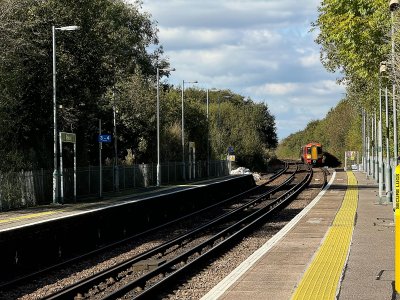
- Connecting Travel: At Polegate, the bus stops near the railway station, making it easy to link up with trains to London or Hastings if you don’t want to go all the way to Eastbourne.
Whether you are a local history buff, an art lover, or just someone who enjoys watching the English countryside roll by, the Compass 125 is a delightful way to slow down and see Sussex from a different angle.