London is a city of layers, and nowhere is this more evident than on the Metropolitan line. As the “grandfather” of the Underground—dating back to 1863—this line isn’t just a way to get from A to B; it is a journey through time, architecture, and the very expansion of London itself.
The route from Aldgate to Uxbridge offers a fascinating cross-section of the capital. You begin in the ancient, bustling heart of the City of London, dive through the Victorian tunnels that started it all, and emerge into the famous “Metro-land”—the leafy, Art Deco-studded suburbs that defined 20th-century London living. Whether you are a railway enthusiast, a history buff, or simply looking for a scenic day out without leaving the TFL network, this route has something special to offer.
What makes this route special
The Metropolitan line is unique on the London Underground network. It was the world’s first underground railway, but today it feels more like a main line express than a tube train.
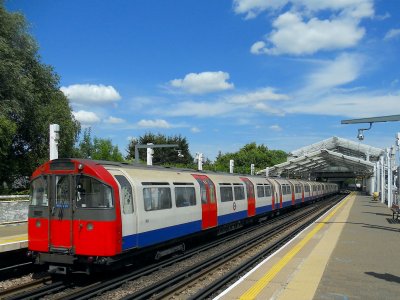
Unlike the cramped, deep-level tube lines, the “Met” uses S8 Stock trains. These are wider, brighter, and—crucially for summer travellers—fully air-conditioned. They feature walk-through carriages and a mix of forward-facing and transverse seating, making it easy to sit back and enjoy the views as the urban sprawl gives way to green spaces.
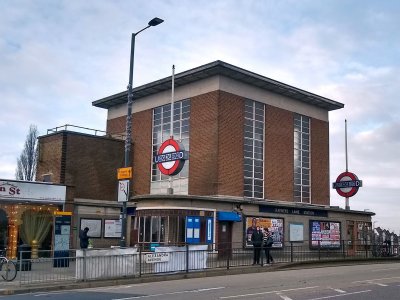
The Uxbridge branch, in particular, is an architectural treasure trove. As you head west, you’ll encounter some of the finest examples of Charles Holden’s modernist station designs, characterized by towering brickwork and geometric glass that look as futuristic today as they did in the 1930s.
The journey: A route breakdown
The City Core
The journey begins at Aldgate, a station steeped in history and built near the site of an ancient plague pit. From here, the train winds through the financial district, stopping at Liverpool Street and Moorgate. These stations are the lifeline of the City, bustling with commuters and buzzing with energy.
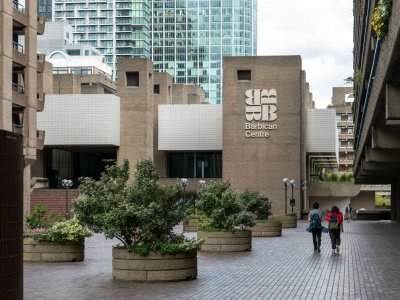
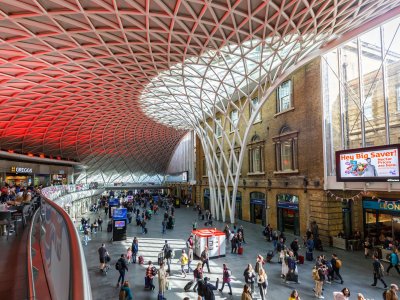
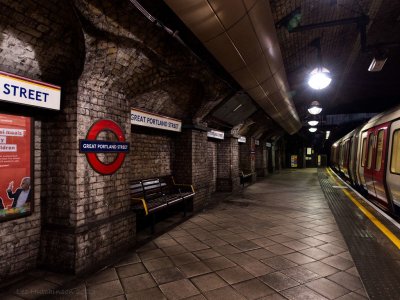
As you pass through Barbican and Farringdon, you are travelling through the original cut-and-cover tunnels opened in 1863. The line continues through King’s Cross and St Pancras, connecting you to the rest of the UK and Europe, before sweeping past Euston Square and Great Portland Street.
Sherlock and the Transition
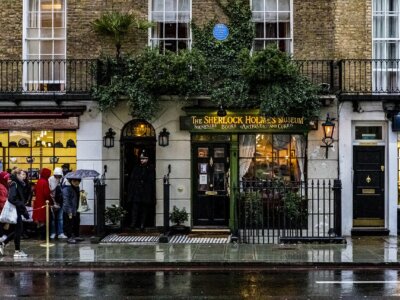
At Baker Street, take a moment to look at the platform walls adorned with Sherlock Holmes silhouettes. This station is a masterclass in restoration, keeping its Victorian charm alive. After Baker Street, the train gathers speed, skipping stops to reach Finchley Road. Here, you burst out of the tunnels and into the daylight, a moment that always marks the true beginning of the journey home for many Londoners.
Into Metro-land
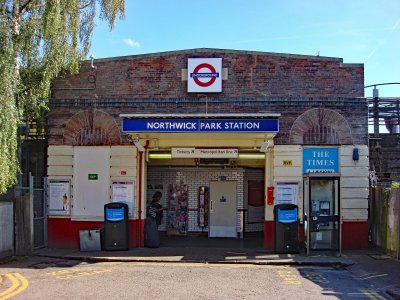
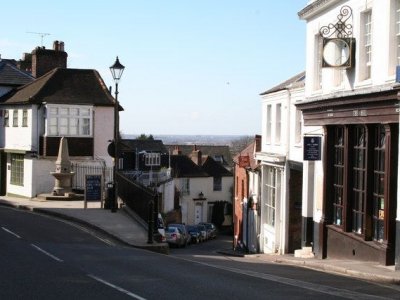
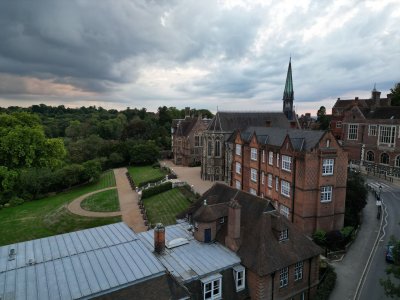
The line creates a dramatic sense of scale as you approach Wembley Park. The world-famous stadium looms large over the tracks, offering one of the best views of the arch from a train window. Passing Preston Road and Northwick Park, you arrive at Harrow-on-the-Hill, the gateway to the suburbs. Perched high up, the station offers sweeping views across the Harrow Weald and is just a short walk from the prestigious Harrow School.
The Uxbridge Branch
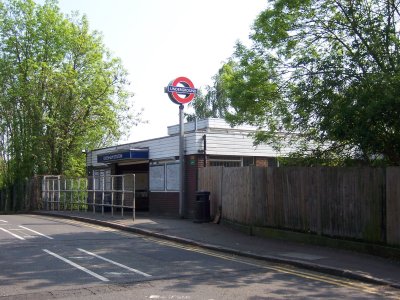
After Harrow, the line splits. We take the curve towards Uxbridge, entering the “leafy suburbs.” The pace feels more relaxed here. You’ll pass through West Harrow before arriving at Rayners Lane, a stunning Grade II listed station that serves as the interchange with the Piccadilly line.
The route continues through Eastcote, Ruislip Manor, and Ruislip. This area is famous for the Ruislip Lido and ancient woodlands, making it a perfect spot for nature lovers. Ickenham follows, leading you to Hillingdon.
- Note: While often listed in databases as Hillington, the station is Hillingdon.
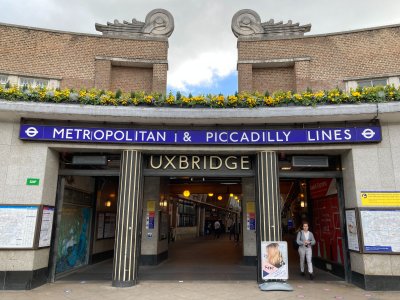
This station was rebuilt in the 1990s and is an architectural award-winner in its own right, with a striking glass structure. Finally, the line terminates at Uxbridge, a bustling town centre with a station that features a beautiful stained-glass canopy and a soaring concrete entrance.
When does the route run
The Metropolitan line is a workhorse of the network. Services generally start as early as 05:00 (a little later on Sundays) and run until around midnight. Because it serves major commuter hubs and Wembley Stadium, it is reliable and runs frequently throughout the year.
Service frequency and connections
One of the best features of this route is its frequency.
- Off-Peak: You can usually expect a train to Uxbridge every 7–8 minutes.
- Peak Times: Frequencies increase to handle the commuter rush.
- Connections: The route offers incredible connectivity. You can switch to the Hammersmith & City and Circle lines in the city, the Jubilee line at Finchley Road and Wembley Park, and the Piccadilly line from Rayners Lane all the way to Uxbridge.
Value for money
Travelling from Aldgate (Zone 1) to Uxbridge (Zone 6) is surprisingly affordable thanks to TFL’s fare capping.
- Contactless & Oyster: This is the cheapest way to travel. The fare is capped, meaning you can make this journey and return later without breaking the bank.
- Off-Peak: Travelling after 09:30 on weekdays or anytime on weekends is significantly cheaper.
- Sightseeing on a budget: For the price of a standard tube fare, you get a 50+ minute tour of London’s changing landscape, from Victorian brickwork to suburban greenery.
Top tips for the journey
- Pick the Right Seat: On the S8 trains, try to grab a “pod” of four seats. It feels much more like a main line train experience and is perfect for groups or families.
- Window Gazing: If you want to see Wembley Stadium, sit on the right-hand side of the train (facing the direction of travel) as you leave Finchley Road.
- Avoid the Rush: The line gets very busy during morning (07:30–09:00) and evening (17:00–18:30) peaks. Travel mid-day or on weekends for a relaxed experience.
Planning a day out on this route
This route isn’t just for commuting; it’s a day trip in itself. Here is a suggested itinerary:
- Start at Baker Street: Visit the Sherlock Holmes Museum or Madame Tussauds before hopping on the train.
- Stop at Ruislip: get off here and take the H13 bus or a short walk to the Ruislip Lido. It’s a 60-acre lake with a sandy beach and a miniature railway—a slice of the seaside in West London.
- Finish at Uxbridge: Explore the pedestrianised town centre or walk just 15 minutes from the station to the Battle of Britain Bunker. This underground operations room played a crucial role during WWII and is exactly as it was in 1940. It’s a must-see for history lovers.
The Metropolitan line to Uxbridge is more than just a transit route; it’s a journey through the history and geography of London. Whether you’re heading to the shops, the woods, or the bunker, it’s a ride worth taking.